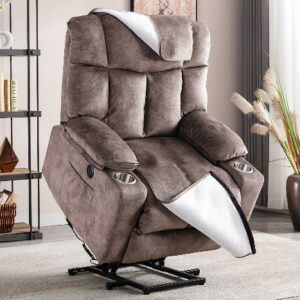
Best Recliner for Sleeping All Night: 4 Models We Actually Recommend

By
Robert Bernal
Robert Bernal
Research Writer
Robert is a professional writer who creates incredible science fiction short stories. When not writing about the alien invasions, he focuses on some more trivial topics maki read more
reviewed
Reviewed By
William Barnett
William Barnett
Expert Consultant
William is a top sales manager in one of the local furniture stores, which sells recliners among others. Like nobody else, he knows what specs to look for to fulfil each cli read more
Last updated: February 26, 2026
ReclinerLand is reader-supported. We may earn a commission through products purchased using links on this page. Learn more about our process here

The best recliner for sleeping all night is a dual-motor power lift model with independent back and footrest controls, breathable fabric upholstery, and at least 160 degrees of recline. Single-motor recliners lock you into preset angles that rarely match what your body actually needs at 2 AM. Dual motors let you fine-tune the exact position where your back stops hurting and your breathing opens up.

That said, I need to be honest about something most recliner sites won’t tell you: sleeping in a recliner every night is not a long-term health strategy for most people. It’s a bridge. It’s what gets you through post-surgery recovery, a bad GERD flare, or a back injury that makes lying flat feel like torture. If you’re using one because your mattress is terrible, buy a better mattress.

If you’re using one because your doctor told you to sleep elevated, then this guide is going to save you from wasting $500 on the wrong chair.

Best Recliner for Sleeping All Night: 4 Models We Actually Recommend

Pros:

  • A good recliner gives acid reflux and sleep apnea sufferers immediate nighttime relief that an adjustable bed frame can’t always match
  • Power lift models eliminate the dangerous stand-up struggle for post-surgery patients and elderly users
  • Dual motors let you position back and legs independently, which is the difference between decent sleep and waking up stiff
  • Battery backup systems on premium models mean you’re never trapped reclined during a power outage

Cons:

  • Faux leather traps body heat within an hour, and most budget recliners use faux leather
  • Massage motors on cheaper models vibrate through thin padding and will wake light sleepers
  • Most recliners under $400 use single motors with three fixed positions, which isn’t enough customization for all-night sleep
  • Long-term nightly recliner sleeping carries real health risks including DVT, joint stiffness, and circulation problems

Our Top Pick: Signature Design by Ashley Yandel Power Lift Recliner

Best Recliner for Sleeping All Night: 4 Models We Actually Recommend

Dual-motor power lift recliner with independent back and footrest control, faux leather upholstery, oversized frame (69″ fully reclined), and smooth lift-to-stand assist. Built for post-surgery recovery, elderly users, and anyone who needs customizable overnight positioning.

Quick Pros: Dual motors for independent back/leg positioning, smooth power lift for safe standing, accommodates users up to 6’4″, 10-minute assembly

Quick Cons: Faux leather traps heat overnight, no massage or heat, 300 lb capacity (lower than competitors), does not lay fully flat, no battery backup included

Buy On Amazon

Quick Comparison: Best Recliners for Sleeping All Night

Model Motor Type Max Recline Massage/Heat Best For Price Range
Ashley Yandel Dual motor Near-flat (not 180) No Post-surgery recovery, elderly lift assist $500-$650
MCombo 7533 Single motor 140 degrees Yes (8 point + lumbar heat) Budget buyers who want extras $350-$450
Esright Power Lift Single motor 150 degrees Yes (5 mode + heat) Massage therapy at a budget price $280-$380
CANMOV Power Recliner Single motor 140 degrees No Quiet, comfortable napping (not all-night) $300-$400

Who Actually Needs a Sleep Recliner (And Who Doesn’t)

Get a sleep recliner if:

  • Your doctor recommended elevated sleeping for GERD, acid reflux, or sleep apnea
  • You’re recovering from back surgery, hip replacement, or abdominal surgery and can’t lie flat
  • You have congestive heart failure and need to reduce fluid buildup while sleeping
  • You have mobility issues and a standard bed makes standing up dangerous
  • Chronic lower back pain or sciatica makes flat sleeping impossible right now

Skip the recliner and fix the real problem if:

  • You’re just sleeping in a recliner because your mattress is uncomfortable (buy a mattress)
  • You’re falling asleep watching TV and calling it your sleep setup (that’s a habit, not a need)
  • You want a recliner for occasional naps (any decent recliner will do, you don’t need a “sleep” model)
  • You’re a side sleeper (recliners are terrible for side sleeping, period)

This distinction matters because the recliners worth buying for actual overnight sleep cost $400 and up. If you don’t genuinely need one for medical or recovery reasons, you’re spending a lot of money on something that’s worse for your body than a $200 mattress.

Why Use a Recliner for Sleeping Overnight?

Choosing a recliner for sleeping overnight is a practical way to manage chronic health issues that make flat sleeping miserable. Many people find that an inclined position significantly reduces symptoms of acid reflux, and research backs this up. Sleeping at even a modest 30-degree incline keeps stomach acid from creeping back up your esophagus, which means fewer midnight wake-ups from that burning chest pain.

Beyond reflux, a quality sleep recliner chair keeps your body stable throughout the entire night. Unlike a bed where you can roll into awkward positions, a recliner gently cradles you in place. For people recovering from surgery who’ve been told not to twist or roll, that stability is a genuine medical benefit.

When searching for the most comfortable recliner to sleep in, check the internal frame before anything else. A solid steel mechanism ensures the chair stays quiet when you shift positions at night. Cheaper chairs with plastic components creak and pop every time you move, and that noise will wake you (or your partner) up repeatedly.

This durability is vital for anyone who plans to use the chair daily. A recliner that groans every time you adjust is a recliner you’ll abandon within a month.

Best Recliners for Sleeping All Night: Detailed Reviews

1. Signature Design by Ashley Yandel Power Lift Recliner

Best Recliner for Sleeping All Night: 4 Models We Actually Recommend

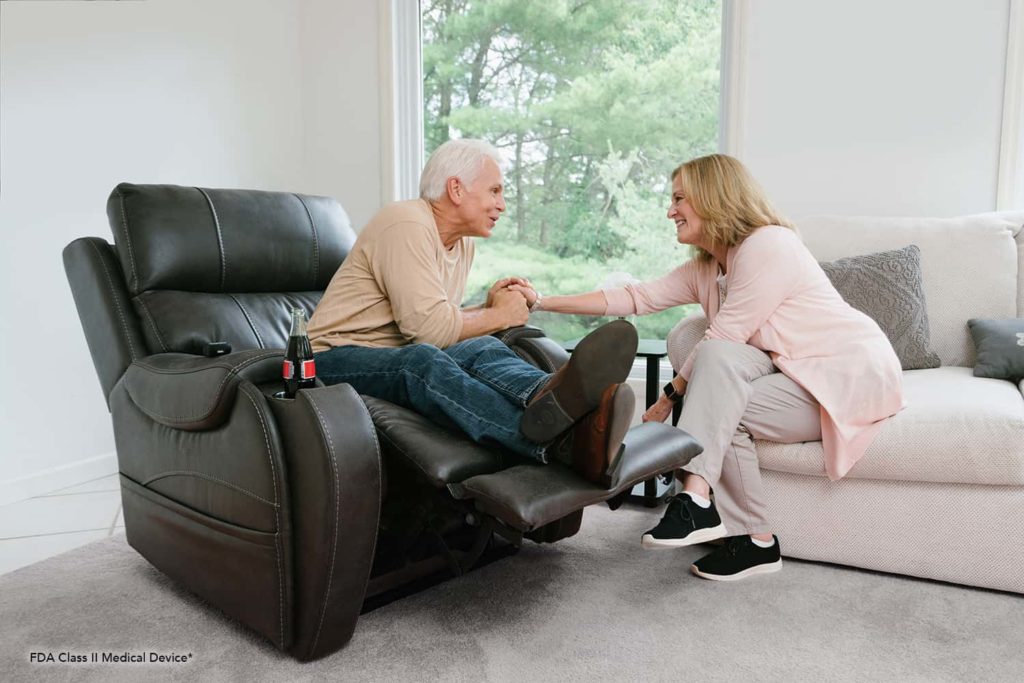
The Ashley Yandel is the recliner I’d recommend first for anyone who needs a power lift chair for overnight sleeping after surgery or with mobility issues. The dual-motor design is what sets it apart from the other three on this list, and that feature alone justifies the higher price.

What dual motors actually mean for sleep: You can tilt the backrest down while keeping the footrest at a different angle, or vice versa. Single-motor recliners move the back and legs together as one unit, which means you’re stuck with whatever combined angle the manufacturer decided on. At 2 AM when your lower back is aching but your legs feel fine, you’ll appreciate being able to adjust one without moving the other.

The lift function is smooth and slow. It tilts the entire chair forward to help you stand up without straining your core or putting pressure on healing joints. People recovering from hip replacements and back surgery consistently mention this as the feature that made their recovery manageable.

Specs:

Specification Details
Motor Type Dual motor (independent back + footrest)
Recline Angle Near-flat (approximately 170 degrees, not fully flat)
Weight Capacity 300 lbs (recommended under 275 for motor longevity)
Upholstery Faux leather (poly fiber)
Dimensions 35″W x 40″D x 44″H (69″ fully reclined length)
Massage/Heat No
Battery Backup No (sold separately)
Assembly 10-15 minutes, minimal tools

Pros:

  • Dual motors provide the most customizable sleeping position of any chair under $700
  • Lift mechanism is genuinely helpful for post-surgery recovery and elderly users
  • Oversized design accommodates users up to 6’4″ comfortably when reclined
  • Assembly takes about 10 minutes and barely requires tools

Cons:

  • Faux leather gets hot within 60-90 minutes of continuous sitting. Multiple reviewers mention covering it with a blanket to sleep. If you sleep hot, this is a dealbreaker.
  • No massage or heat. For a chair in this price range, that’s a notable absence.
  • The 300 lb weight capacity is lower than competitors. If you’re over 275 lbs, the motors will wear faster.
  • Does NOT lay completely flat. It gets close, but there’s still a slight angle. Side sleepers will not be comfortable.
  • No battery backup included. If the power goes out, you’re stuck reclined until it comes back unless you buy a backup separately.

Who it’s for: Post-surgery patients who need lift assistance and independent position control. Elderly users with mobility issues who sleep in their recliner regularly. Anyone whose doctor recommended elevated sleeping for GERD or heart conditions.

Who should skip it: Budget buyers (the Esright does more for $200 less). People who want massage and heat features. Anyone over 275 lbs. Hot sleepers who hate faux leather.

Buy On Amazon

2. MCombo Electric Power Lift Recliner (7533)

MCombo Dual Motor Power Lift Recliner Chair

The MCombo 7533 is the recliner most people end up buying when they search for a sleep chair on Amazon, and for good reason. It packs massage, heat, extended footrest, adjustable headrest, USB ports, and cup holders into a chair that costs half of what the Ashley Yandel runs. The catch is that it’s a single-motor design, which limits your positioning flexibility.

The extended footrest is the feature that matters most for sleeping. Standard recliner footrests end right at the ankle, which means your heels hang off the edge and go numb after an hour. MCombo added an extra 4.7 inches, which keeps your entire foot supported. If you’re over 5’10”, this is the difference between sleeping comfortably and waking up with pins and needles in your feet.

Specs:

Specification Details
Motor Type Single motor
Recline Angle Approximately 140 degrees
Weight Capacity 320 lbs
Upholstery Plush fabric (multiple colors)
Massage 8 vibration points, 5 modes
Heat Lumbar heating zone
Extended Footrest Yes (+4.7 inches)
Battery Backup Yes (sold separately, available on MCombo site)
Assembly 15-20 minutes, two boxes

Pros:

  • The fabric upholstery breathes significantly better than the Ashley Yandel’s faux leather for overnight sleeping
  • Extended footrest eliminates the “heel hang” problem that plagues most recliners
  • 8-point massage with lumbar heat is legitimately useful for pre-sleep muscle relaxation
  • Adjustable headrest lets you tilt your head without moving the entire backrest
  • Higher weight capacity (320 lbs) than the Ashley Yandel

Cons:

  • Single motor means the back and legs move together. You cannot adjust them independently.
  • Ships in two large boxes that frequently arrive on different days. Plan for a messy living room.
  • The massage vibration travels through the padding on lighter body types. If you weigh under 150 lbs, you may feel the motors more than the massage.
  • Some users report seat cushion breakdown after 5-6 months of daily use. The foam compresses faster than the Ashley Yandel’s denser padding.
  • The “lift” chair aesthetic is undeniable. This looks like medical equipment, not living room furniture.

Who it’s for: Post-surgery patients who want massage and heat. Taller users (5’10″+) who need the extended footrest. Budget-conscious buyers who want features over aesthetics.

Who should skip it: Anyone who cares about independent back/leg positioning (get the Ashley Yandel instead). People who want furniture-store looks. Light sleepers who might feel the massage motors through the padding.

Buy On Amazon

3. Esright Power Lift Recliner

Best Recliner for Sleeping All Night: 4 Models We Actually Recommend

The Esright is the budget king of sleep recliners, and it’s the one I’d point someone toward if they need a functional recliner for recovery but can’t justify spending $500+. It hits all the baseline requirements: power lift, massage, heat, side pockets, cup holders.

The five massage modes are more varied than what you’d expect at this price. Most sub-$300 recliners give you one speed of vibration and call it “massage.” The Esright actually cycles through different patterns and intensity levels, which makes the pre-sleep wind-down genuinely relaxing rather than just buzzy.

Specs:

Specification Details
Motor Type Single motor
Recline Angle Approximately 150 degrees
Weight Capacity 330 lbs
Upholstery Faux leather (PU)
Massage 4 zones, 5 modes, 2 intensity levels
Heat Lumbar zone
Cup Holders 2
Side Pockets 2
USB Ports No
Assembly 15-20 minutes

Pros:

  • Best feature-to-price ratio of any sleep recliner on Amazon
  • 150-degree recline angle beats the MCombo 7533 and gets closer to flat
  • 330 lb weight capacity is the highest on this list
  • Five massage modes with two intensity levels provides genuine variety
  • Cup holders and side pockets keep nighttime essentials within reach

Cons:

  • Faux leather. Same heat problem as the Ashley Yandel. You’ll sweat overnight.
  • The seat runs firmer than expected. If you’re coming from a plush sofa, the first week feels like sitting on a park bench.
  • At this price point, motor longevity is a concern. Multiple reviews mention motors failing within 12-18 months of daily use.
  • No USB ports. Minor, but the MCombo includes them at a similar price.
  • The seat is narrower than it looks in photos. Users over 250 lbs report feeling squeezed.

Who it’s for: Budget buyers who need a functional sleep recliner with massage and heat. Heavier users who need the 330 lb capacity. Short-term recovery use where long-term durability matters less.

Who should skip it: Anyone planning to use this as a primary sleep surface for more than 6 months. Hot sleepers. People who want a soft, plush feel immediately.

Buy On Amazon

4. CANMOV Power Recliner

Best Recliner for Sleeping All Night: 4 Models We Actually Recommend

The CANMOV is the oddball on this list because it’s not a lift chair and it doesn’t have massage or heat. What it does have is the quietest motor of any power recliner under $400 and an overstuffed backrest that actually feels like it was designed for comfort instead of checkboxing features.

If your primary use case is a comfortable chair for extended sitting and occasional overnight sleep (not nightly), the CANMOV is a better choice than loading up on massage features you’ll stop using after the first month.

Specs:

Specification Details
Motor Type Single motor
Recline Angle Approximately 140 degrees
Weight Capacity 300 lbs
Upholstery Breathable polyester (faux-leather look)
Massage/Heat No
Frame Heavy-duty steel
Wall Clearance 18-20 inches required
USB Charging Yes (active only when chair is plugged in)

Pros:

  • The quietest motor on this list. You can adjust position at night without waking anyone.
  • Breathable polyester upholstery that looks like leather but doesn’t trap heat. Best upholstery for sleeping of any chair here.
  • Overstuffed backrest and lumbar area provide a genuinely plush feel without bottoming out
  • Heavy-duty steel frame feels more stable than the other three during position changes

Cons:

  • No lift function. If you need help standing, this is the wrong chair.
  • 140-degree recline is the lowest on this list. You will not get close to flat.
  • Requires 18-20 inches of wall clearance, which rules it out for smaller rooms
  • USB port only works when the chair is plugged in, which defeats the purpose of a charging port
  • Not designed for all-night, every-night sleeping. It’s a great nap chair, a decent occasional sleep chair, and nothing more.

Who it’s for: People who want a comfortable, quiet recliner for extended lounging and occasional overnight sleep. Anyone who prioritizes upholstery comfort over features. Rooms where motor noise would be disruptive.

Who should skip it: Anyone who needs lift assistance. Nightly sleep recliner users. People who want massage and heat. Small-room dwellers who can’t spare 20 inches behind the chair.

Buy On Amazon

Recliner That Lays Flat for Sleeping

A recliner that lays flat for sleeping is the closest thing to a bed alternative you’ll find in a chair. Most standard recliners stop at around 140-150 degrees of recline, which leaves a noticeable gap between the seat and the backrest that digs into your lower back over time. Modern lay-flat models eliminate this gap entirely, creating a smooth, continuous surface from headrest to footrest.

This design makes a lay-flat recliner the best option for back pain sleep because it stops the slouching that happens when cheaper recliners leave your lower back unsupported at that awkward midpoint angle. You can stretch out fully without feeling the metal bars or frame joints beneath the cushions. If you’re transitioning from a standard mattress to a chair because of a medical need, a lay-flat model is the one that will feel the least foreign.

That said, none of the four chairs on this list lay perfectly 180-degree flat. The Ashley Yandel gets closest at roughly 170 degrees. True lay-flat recliners (sometimes called “infinite position” chairs) start around $600 and go up from there. MCombo makes a lay-flat dual-motor model (the 7661 series) that reclines to approximately 165 degrees if you need to get closer to fully flat than what the chairs above offer. For true 180-degree flat sleeping, you’re looking at hospital-style recliners or adjustable bed frames.

Zero Gravity Recliner for Sleeping

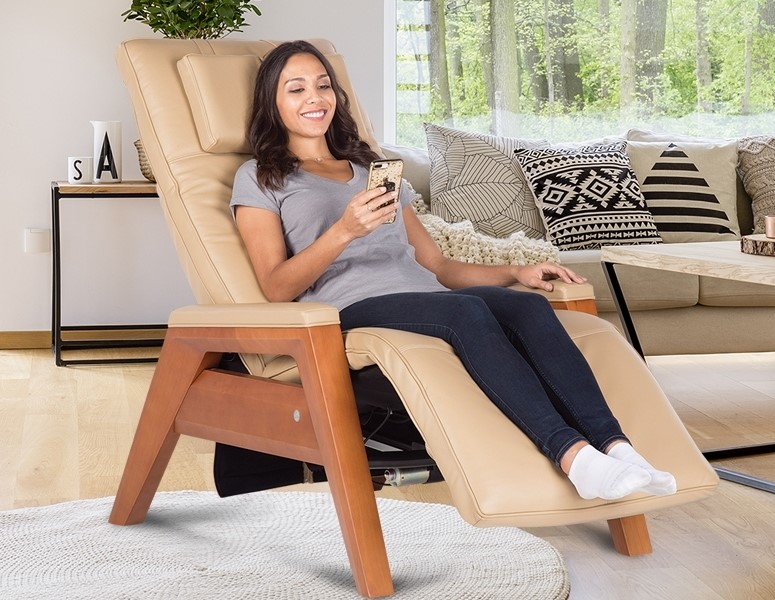
A zero gravity recliner for sleeping lifts your legs to roughly heart level while reclining your back to about 120-130 degrees. The name comes from the neutral body posture astronauts naturally assume in weightless environments, where the absence of gravitational load lets every joint and muscle decompress simultaneously. In a zero gravity position, your body weight distributes evenly across the entire chair surface instead of concentrating on your hips and lower back.

Using a zero gravity recliner for sleeping genuinely helps with three things. First, it reduces pressure on your spine by opening the angle between your torso and thighs, which decompresses the vertebral discs. Second, it improves circulation in your legs, and people with edema or chronic foot swelling notice the biggest difference here. Third, it slightly opens your airways for easier breathing, which is why sleep specialists sometimes recommend this position for mild sleep apnea.

Here’s the honest reality check: true zero gravity recliners that hold this position precisely all night cost $1,500 and up (brands like Svago or Human Touch). The sub-$500 recliners on this list can approximate zero gravity if they have dual motors, but they’re not specifically engineered for it.

The Ashley Yandel comes closest because you can independently raise the footrest high while moderating the backrest angle. If zero gravity sleep is your primary goal and budget isn’t a hard constraint, an adjustable bed frame with a zero-G preset will serve you better than any recliner.

Power Lift Recliner for Sleeping

A power lift recliner for sleeping is a vital tool for anyone recovering from surgery or dealing with mobility issues that make standing up from a regular chair dangerous. The motorized base tilts the entire chair forward to help you get on your feet with minimal effort. This prevents you from straining your abdominal muscles, stressing healing joints, or losing balance when transitioning from reclined to standing.

Most quality power lift recliners include (or offer as an add-on) a backup battery system for safety during power outages. Being trapped in a reclined position during a blackout is not just inconvenient; for elderly users or post-surgery patients, it can be genuinely dangerous. Always confirm that a battery backup is available for your specific model before purchasing.

When picking the best power lift recliner for sleeping all night, motor noise matters more than you’d think. Cheap motors make a grinding or whirring sound every time you adjust position, and you will adjust positions during the night. Premium models use quiet-drive motors that keep transitions smooth and nearly silent. The CANMOV has the quietest motor of the four chairs on this list, but since it lacks the lift function, the MCombo 7533 is the best compromise between lift capability and acceptable noise levels.

Feature Power Lift Recliner Standard Power Recliner
Stand-up assistance Yes, motorized tilt-forward No, you push yourself up
Best for Post-surgery, elderly, mobility issues General comfort, occasional naps
Recline range Typically 140-170 degrees Varies widely (100-180 degrees)
Battery backup available Usually yes Rarely
Aesthetic Medical/functional Living room furniture
Price range $350-$800+ $200-$600+
Insurance coverage potential Sometimes (Medicare may cover lift mechanism) No

The real decision point: If you or someone in your household has trouble standing up from a seated position, a power lift recliner is not optional. It’s a safety issue. Falls from furniture are one of the leading causes of injury in adults over 65. The $150 premium for a lift mechanism pays for itself the first time it prevents a fall.

Is It OK to Sleep in a Recliner Every Night?

Yes, it is fine to sleep in a recliner every night if the chair is properly supportive and you have a medical reason for doing so. Many people find that an inclined position helps them breathe more easily during deep sleep cycles, especially those dealing with acid reflux, GERD, sleep apnea, or congestive heart failure. Choose a chair with a headrest that properly supports your neck and enough recline range that your spine isn’t compressed.

If you have mobility issues, a power lift recliner for sleeping makes the nightly routine safer. It allows you to stand up without putting stress on your joints, which matters when you’re doing it every single morning.

But here’s the nuance most recliner sites skip: while short-to-medium term recliner sleeping is perfectly fine and often medically beneficial, long-term nightly use carries legitimate health risks. Keeping your knees and hips bent for 7-8 hours every night can lead to joint contractures, where your hip flexors and hamstrings progressively tighten until your posture and mobility take a hit. Prolonged bent-leg positions also increase your risk of deep vein thrombosis (DVT), which is a blood clot that can become life-threatening if it travels to your lungs.

The honest recommendation: use a recliner for sleep when you need it, work toward getting back to a bed when your condition allows, and talk to your doctor if you’ve been sleeping in one for more than a month straight. Always listen to your body and adjust the settings to find your best position. If you need long-term elevated sleeping, an adjustable bed frame is a healthier investment than a recliner.

Recliner for Back Pain Sleep: What Actually Helps

A recliner can provide back pain relief during sleep that a flat mattress simply cannot match, but only if you get the positioning right. The benefit isn’t just “recline and hope for the best.” There’s a specific setup that takes pressure off your lumbar spine and opens up compressed nerves.

For lower back pain and sciatica: You want a zero gravity position or close to it, where your thighs are elevated slightly above your heart and your back is reclined at roughly 120-130 degrees. This opens the angle of your hip joints and takes pressure off the sciatic nerve. The Ashley Yandel’s dual motors make this positioning easiest because you can raise the footrest high while keeping your back at a moderate recline. Single-motor chairs force you to accept whatever combined angle they offer. If you need a recliner specifically for back pain sleep, the MCombo with its extended footrest is the most effective option for keeping pressure off the nerves in your lower back while maintaining good leg circulation.

For post-surgery back pain: A power lift recliner with an extended footrest (like the MCombo 7533) prevents the dangerous forward-lean that happens when you try to stand from a regular chair. The lift mechanism does the work your core muscles can’t do yet.

What doesn’t work: Sleeping in a recliner at a near-upright angle with the footrest barely elevated. This compresses your spine more than lying flat. If you’re sleeping at less than a 120-degree recline angle, you’re probably making your back pain worse, not better.

Finding the Most Comfortable Recliner to Sleep In

To find the most comfortable recliner to sleep in, focus on the upholstery first. Heat buildup is a major problem during long eight-hour sleep sessions, and it’s the number one reason people abandon their recliner after the first week. Performance fabrics and breathable polyester are significantly better at managing your body temperature than faux leather, which starts trapping heat within the first hour.

Here are the features that separate a decent recliner from one you can actually sleep through the night in:

Cooling Gel Foam — Some premium models use gel-infused memory foam that actively pulls heat away from your skin while you sleep. This is the single biggest comfort upgrade you can look for if you sleep hot.

Independent Motors — Dual-motor chairs let you move the head and feet separately, which means you can find the exact angle where your back stops hurting without compromising your leg position. This is the difference between “good enough” sleep and actually waking up refreshed.

Padded Arms — Wide, padded armrests support your elbows in any position and prevent the arm numbness that comes from resting on hard surfaces for hours.

Built-in Heat — Lumbar heating zones soothe aching muscles before sleep and can help you fall asleep faster. The MCombo 7533 and Esright both include this feature.

Adjustable Headrest — A power headrest that tilts independently prevents the chin-to-chest compression that causes neck pain and airway restriction during reclined sleep.

Using a chair with these features ensures you don’t wake up feeling stiff and sore. The right materials will support your joints while keeping your skin dry and cool. Always test the seat’s firmness before committing if possible. A chair that feels great for 20 minutes in a showroom can feel completely different after 6 hours of continuous contact.

Pressure Point Relief and Circulation

A sleep recliner chair should distribute your body weight evenly across the entire seating surface. If the padding is too thin, you will feel the metal frame underneath within the first few hours. This leads to pressure points that cut off circulation and cause your limbs to tingle or go numb.

High-density memory foam is the best material for long-term pressure relief during overnight sleep. It contours to your body shape and provides consistent support without creating hard spots. The CANMOV’s overstuffed backrest does this well. The Esright’s firmer padding takes longer to break in but holds its shape better over months of daily use.

Good circulation is essential for restorative sleep. If you’re waking up with numb hands, tingling feet, or swollen ankles, your recliner is creating pressure points that restrict blood flow. Try placing a small rolled towel behind your knees to redistribute the pressure, and wear compression socks if you sleep in a recliner regularly. This simple combination reduces DVT risk and prevents morning stiffness.

The Benefits of Independent Headrest Control

Many people forget how important neck alignment is for a full night of sleep in a recliner. The best recliner for sleeping all night should have an independent power headrest that you can tilt without changing your overall body position.

Here’s why this matters: standard recliner headrests are fixed to the backrest. When you recline, the headrest pushes your chin toward your chest, which compresses your cervical spine and partially closes your airway. You wake up with a stiff neck, a sore throat, or both. An independent headrest lets you tilt your head back to maintain the natural curve of your spine regardless of your recline angle.

Proper head support also helps keep your airways open if you snore or have mild sleep apnea. The slight backward tilt prevents your tongue and soft tissues from collapsing into your airway. Being able to adjust this with a remote at 3 AM is far easier than fumbling with pillows in the dark.

The MCombo 7533 includes an adjustable headrest. The Ashley Yandel does not. If neck problems are a primary concern, this feature alone might tip your buying decision.

Choosing Upholstery for Overnight Sleeping

Over time, furniture can trap odors from sweat and skin oils during long sleep sessions, and this becomes a real issue faster than you’d expect with nightly use. To keep your sleep recliner chair fresh long-term, choose an antimicrobial or breathable fabric. Synthetic blends are generally easier to clean and resist deep stains better than natural cotton.

Factor Fabric (Polyester/Microfiber) Faux Leather (PU/Poly Fiber)
Breathability Excellent. Air circulates through the weave. Poor. Traps body heat within 60 minutes.
Sweat management Absorbs and wicks moisture Pools on the surface, feels clammy
Cleaning Needs regular vacuuming, occasional spot treatment Wipe-clean, stain resistant
Durability (daily sleep use) Holds shape longer under consistent pressure Peels and cracks within 1-3 years of heavy use
Comfort in summer Cool Uncomfortably warm
Odor absorption Can trap odors over time (vacuum regularly) Resists odor absorption

The verdict for sleeping: Fabric wins for overnight use, and it’s not close. The MCombo 7533 and CANMOV both offer fabric options that breathe significantly better than the faux leather on the Ashley Yandel and Esright.

If you’re set on a leather look, genuine leather is better than faux because it doesn’t peel and stays cooler to the touch. But genuine leather recliners start at $800+, which prices out most of the chairs on this list. The practical solution: if you buy a faux leather recliner, drape a cotton sheet or breathable blanket over the contact surfaces. It eliminates 90% of the heat and sticking complaints.

Consider your local climate before deciding. In hot, humid climates, fabric upholstery is almost non-negotiable for overnight sleeping comfort. In cooler, drier climates, faux leather becomes more tolerable.

How to Properly Position Yourself for Sleep in a Recliner

To get the most out of your recliner for overnight sleep, positioning is everything. Most people who try recliner sleeping and hate it are making the same mistakes. Fix these and the experience changes dramatically.

Step 1: Start by reclining the backrest until you feel your weight shift off your hips and distribute across your back. You want at least a 130-degree angle. Sleeping at a slight recline (barely tilted back) is the worst possible position. It compresses your lower spine and restricts blood flow.

Step 2: Lift the footrest until your knees are slightly bent and your feet are fully supported. Your heels should rest on the footrest, not hang off the edge. If they hang, place a small pillow at the end to support them.

Step 3: Add neck support. Do NOT rely on the built-in headrest unless it’s independently adjustable. Place a small cervical pillow or rolled towel behind your neck (not your head) to maintain the natural curve of your spine. This single adjustment solves the “I woke up with a terrible neck” problem.

Step 4: If you’re not using a lay-flat model, a small lumbar pillow behind your lower back fills the gap that most recliner backrests leave in the lumbar region. Taking a few minutes to find the perfect angle will lead to dramatically better rest than just hitting the recline button and hoping for the best.

Additional tips:

  • Wear compression socks if you sleep in a recliner regularly. This reduces DVT risk and prevents morning ankle swelling.
  • Set a gentle alarm to shift positions every 3-4 hours if possible. Staying locked in one position all night causes stiffness.
  • Keep the room cool. Recliners retain more body heat than a mattress.
  • If you’re using the chair for GERD, eat your last meal at least 3 hours before reclining.
  • Throw a cotton sheet over faux leather upholstery to prevent sweating.

Customizing Your Recliner with Accessories

You can make the most comfortable recliner to sleep in even better with a few targeted accessories. These small additions often make the difference between a chair you tolerate and one you actually look forward to sleeping in.

Swing-out tables — Many manufacturers offer add-on tables that swing out of the way when you recline. Perfect for keeping water, medication, or your phone within arm’s reach without having to twist or lean.

Cervical pillows — A proper cervical support pillow (not a bed pillow) maintains neck alignment in a reclined position. This is the single most impactful accessory for sleep quality.

Padded armrest covers — Soft covers add an extra layer of comfort for your elbows and forearms. After 6+ hours of contact, bare armrests create pressure points.

Thin mattress toppers — Some users add a slim memory foam topper (1-2 inches) over their recliner seat for a softer feel. This works especially well on the Esright, which runs firmer than expected out of the box.

Cotton sheet or blanket — Drape over faux leather surfaces to prevent heat buildup and sweating. The simplest, cheapest upgrade and arguably the most effective.

Make sure to measure your room before ordering a large power model. Most power lift recliners need 18-24 inches of clearance behind them, and a wall-hugger model may be necessary if your space is tight.

Common Recliner Problems for Overnight Sleepers (And How to Fix Them)

“I wake up with a stiff neck every morning”

Your headrest position is wrong. Most recliner headrests push your chin down when reclined, which compresses your cervical spine. Buy a small cervical support pillow and place it behind your neck, not your head. If your recliner has an adjustable power headrest, tilt it back slightly so your head stays neutral.

“My feet go numb after a few hours”

Two causes: either your footrest is cutting off circulation behind your knees, or your feet are hanging off the edge. For the knee issue, place a small rolled towel under your knees to redistribute pressure. For heel hang, the MCombo 7533’s extended footrest solves this, or you can place a small pillow at the end of any recliner’s footrest.

“The chair gets unbearably hot overnight”

Faux leather is the culprit 95% of the time. Your options: switch to a fabric model, drape a breathable cotton sheet over the contact surfaces, or buy a cooling gel seat pad. Running a fan directly on the chair also helps.

“The motor makes noise when I adjust position at night”

Cheap motors grind. The CANMOV has the quietest motor in the sub-$400 range. For other chairs, applying a small amount of silicone lubricant to the recline mechanism (not the motor itself) can reduce mechanical noise from the moving parts.

“I feel trapped when the power goes out”

Buy a battery backup ($20-$30) and install it. If your recliner doesn’t support one, locate the manual release lever on the underside of the chair before you need it.

Frequently Asked Questions

Can I use a regular pillow in a sleep recliner?

You can use a standard pillow, but a small neck roll is often better. It keeps your head from falling forward when the chair is slightly tilted.

How do I clean a sleep recliner chair?

Most best recliner for sleeping all night require regular vacuuming in the crevices. Use a damp cloth for spills and check the motor for dust.

Will a sleep recliner fit in a small bedroom?

You should look for a “wall-hugger” model if your room has limited space. These chairs only need a few inches of clearance to reach full recline.

How long do motorized recliners usually last?

A high-quality motorized chair should last between seven and ten years with regular care. Always check the warranty on the frame and the motor before you purchase.

Leave a comment

Your email address will not be published. Required fields are marked *