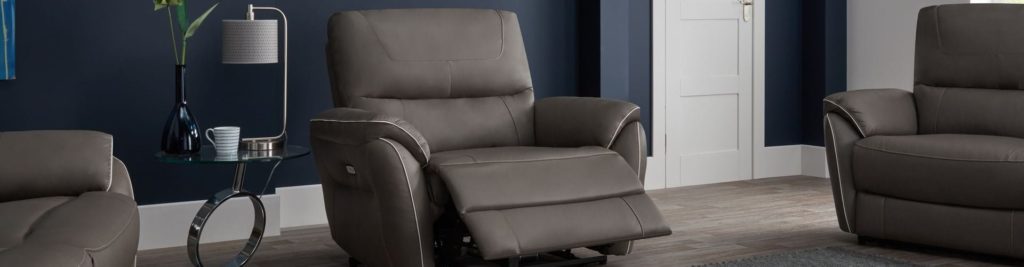
The Duramont Reclining Leather Office Chair is the best reclining office chair in 2026, because it does the one thing owner threads keep asking for and rarely get at this price: a lever that locks the backrest anywhere from 90° to 155°, not two or three preset stops, with a footrest that slides out for the nap the recline is for. If you work eight hours in the chair and lean back to rest your spine rather than sleep, the mesh Hbada E3 Pro 2026 is the better daily seat; if you weigh over 250 lbs or want the deepest recline here, the 400 lb GYI SE801 goes to 160°.
We ranked these three by whether the recline holds where you set it. Owner reviews of reclining office chairs share one complaint above all others: the chair leans back, but nothing holds it there, so you’re either bracing with your legs or rocking. A recline you can’t lock is a rocking chair with a footrest.
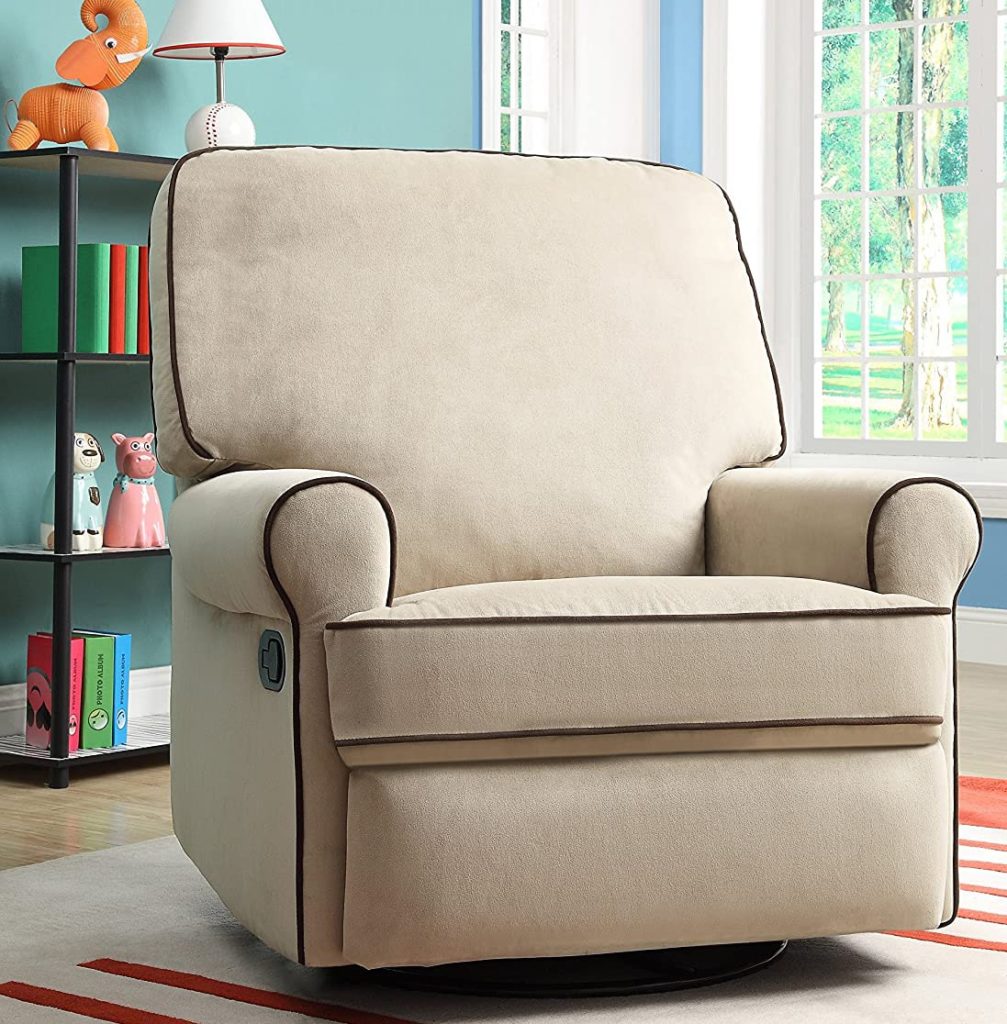
A reclining office chair is a desk chair whose backrest tilts past the 100° to 110° range of a standard task chair, usually to 135° to 160°, and locks at the chosen angle. It comes in three types: executive recliners with a retractable footrest (deepest recline, PU or bonded leather, built for naps), ergonomic mesh chairs with a slide-out footrest (shallower 135° to 145° recline, breathable, better for full workdays), and big-and-tall recliners on a wider seat and reinforced base (400 lb ratings, widest seats).
The three things that decide whether the chair works for you are:
The lock is the feature. Pull the lever on the left, lean to anywhere between upright and 155°, push it back in, and the chair stays there, which is why this one keeps surfacing in owner threads about napping at a desk. Around the lock sits a solid executive package: a waterfall seat edge that keeps pressure off the back of your knees, a retractable footrest, tilt tension under the seat, and a bonded-leather shell that reads as an office chair rather than a gaming seat.
Weakness, stated plainly: rated to 250 lbs, the lowest here, and the built-in lumbar doesn’t do much on its own; the fix owners settle on is a $15 lumbar pillow. Bonded leather is glued leather scrap, so expect wear at the seat edge sooner than a PU chair would show it.
The chair for people who work in the recline instead of sleeping in it. Four locked positions at 105°, 115°, 130°, and 140°, a gravity-sensing mechanism that sets tilt tension from your body weight so you never touch a knob, three-zone lumbar with side wings that pivot to follow you back, and a 4D headrest that lands behind your head when you lean, the spot fixed executive headrests miss. Mesh back and seat, slide-out footrest included, 3-year warranty.
Weakness: 140° is the ceiling, so this is a rest position, not a bed, and four stops are not stepless. The footrest is a mesh rail rather than a padded platform, fine for a 20-minute lean and thin for a nap. Hbada’s naming is a mess (E3, E3 Pro, E3 Ultra, 2026 Edition), so confirm the listing says “with Footrest” before checkout.
The widest seat, the deepest recline, and the highest rating here: 400 lbs and 160°, on a seat cut for cross-legged sitting so larger users aren’t wedged between side bolsters. The footrest slides out from under the seat, the arms are padded rather than hard nylon, and the high back reaches far enough that taller users don’t need a bolt-on pillow.
Weakness: no adjustable lumbar or headrest; the comfort is padding, not ergonomics, so it’s a nap-and-meetings chair more than a typing chair. At 160° with a big user, the base needs a level floor, and you recline slowly. GYI sells only through marketplaces, so treat the return window as your warranty until you confirm terms.
“180° lies flat” gaming-style chairs. The seat pan doesn’t tilt with the back, so flat means your head ends up below your hips, and nearly every tip-over story in owner reviews starts with a 180° chair. Anything under a 300 lb+ rating with an unlabeled gas lift is the next thing to pass on; the cylinder is what sinks first, so look for an SGS or BIFMA Class 3 or 4 stamp (our explainer on whether office chairs can explode covers why the class matters).
Built-in massage and heat are a different purchase: the motors eat into the padding and add a cord, so if you want them, start with our massage office chair roundup instead. And if what you want is to lie back for an hour, a proper recliner beside the desk does it better than any office chair; our guide on how to choose a recliner covers sizing.
How far should a reclining office chair recline?
135° covers reading and resting your back; 150° to 160° with a footrest is what you need to nap. Past 160° the seat pan stays level while the back drops, so “flat” chairs put your head lower than your hips, which is why owners rarely use that last stop.
Do reclining office chairs tip over?
They can at full recline if you drop back quickly on a hard floor with your feet off the footrest. Keep the casters on carpet or a chair mat, recline slowly, and rest your feet on the footrest so your weight stays inside the base. A 400 lb-rated frame like the GYI is more forgiving here than a 250 lb executive chair.
Can you use a reclining office chair for eight hours of work?
Yes, if it’s a mesh ergonomic model with adjustable lumbar and headrest like the Hbada, which is built to be sat in upright and rested in at 115° to 130°. Leather executive recliners are designed around the part of the day you lean back; they run warm and offer less lumbar adjustment, so they suit split days of desk work and breaks better than eight straight hours of typing.