“Big and tall” is a width claim. Nearly every recliner with that label is wider and rated for more weight than a standard chair, and almost none are longer. A 6’6″ Reddit user bought one, found it fit like a kiddie pool, and gave it to his dog. Dimensions decide this, not labels.
After reading owner reports from tall buyers on Walmart, Amazon, r/tall and r/BuyItForLife, plus La-Z-Boy’s dealer fitting guides, one chair stood out for printing a height range and delivering on it: the Mcombo 380 lb Dual Motor Lay Flat Lift Recliner, rated 5’7″ to 6’6″ and confirmed by owners at the top of that range.
A recliner fits a tall person when three measurements match their body, not when the listing says “big and tall”: a seat depth of 22 inches or more for long thighs, a back tall enough that the headrest lands behind the skull rather than the neck, and a fully reclined length of at least 72 inches, rising to 76 or more above 6’4″. Which one you need depends on whether your height is in your legs or your torso.
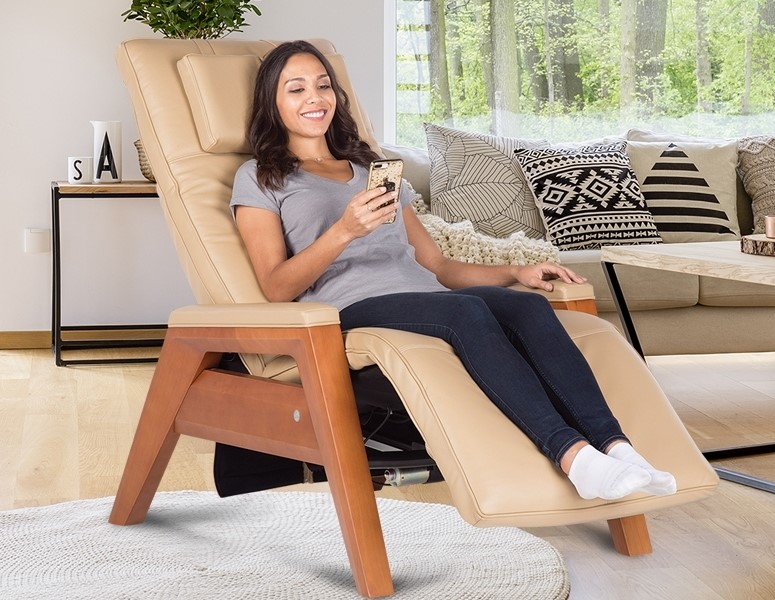
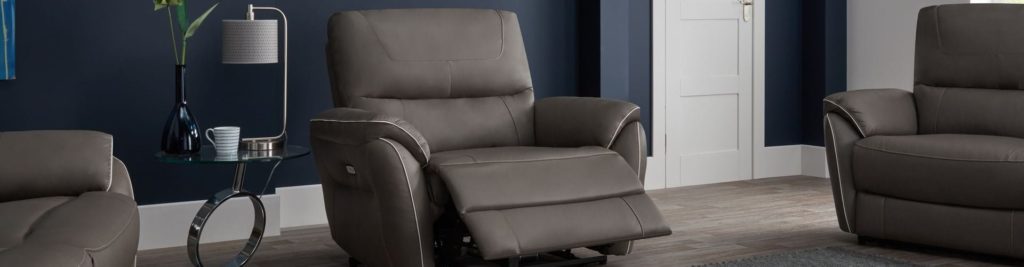
Seat width: 27 in. | Back height: 32.3 in. | Stated height range: 5’7″–6’6″ | Capacity: 380 lbs.
Mcombo did what almost no manufacturer does and printed a height range on the listing. It’s the same brand that tops our electric recliners guide, here in the oversized frame. Owners back it up. A verified Walmart buyer who needed both wide and tall said it works, with two wishes: a higher-rising footrest and adjustable lumbar. Another reported his feet stay on the footrest when elevated. The 32.3-inch back is shorter than the 36 inches competitors quote; it works because the power headrest extends upward. At 27 inches wide, a lean 6’4″ frame will have room to spare.
Pros: published height range, dual motors, lay-flat.
Cons: no lumbar adjustment, wide for lean users.
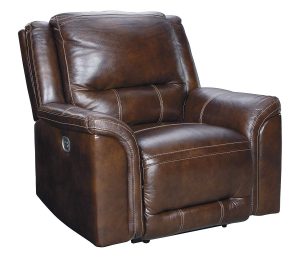
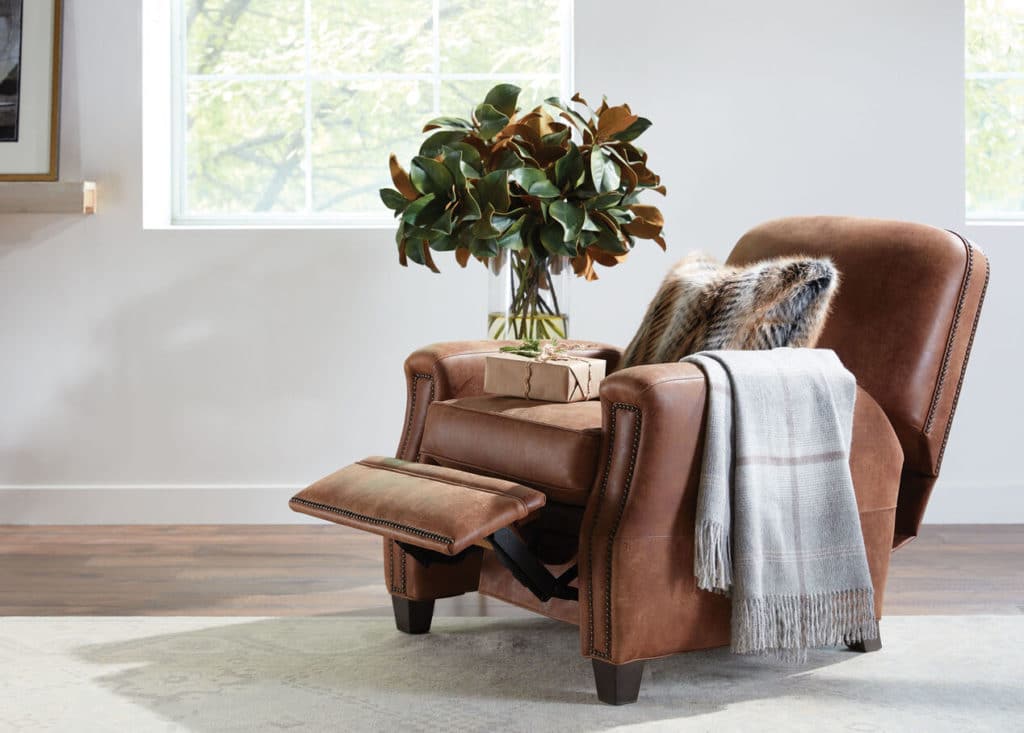
Reclined length: ~70 in. | Upholstery: top-grain leather seat and arms | Capacity: 300 lbs.
Not everyone tall needs lift. We already called this one ideal for tall users in our power recliner roundup, and it holds the spot. Around 70 inches reclined covers most people to 6’2″, and the headrest articulates high enough to support rather than push. It needs three feet from the wall and carries a standard 300 lb rating, so it suits a tall, lean buyer rather than a tall, heavy one.
Pros: real leather where you touch it, adjustable headrest.
Cons: wall clearance, not heavy-duty.
Dimensions: 44 H × 40 W × 43 D in. | Seat depth: 22.5 in. | Seat height: 20 in. | Seat: one-piece chaise | Warranty: limited lifetime
La-Z-Boy’s own dealers fit the Gibson to extra-tall body types, 6’3″ and up, and the 44-inch overall height gives it the tallest back on this list. At 22.5 inches, the seat depth clears the threshold set above, which is why it works for long femurs where the Catanzaro doesn’t. The one-piece chaise seat means no gap between seat and legrest, which matters when your calves are long enough to find one.
Two honesty notes. The tall-fit evidence here comes from dealer fitting guides rather than owner reviews, because the Gibson is a custom order and doesn’t accumulate reviews the way an Amazon chair does. And the seat width is 17 inches, which is narrow. This is a tall chair, not a big-and-tall chair, so a broad frame will feel it. One warning for the whole brand, which we cover across our La-Z-Boy recliner picks: seat depths vary by three and a half inches between models, so “La-Z-Boy fits tall” is only true model by model. Over 6’6″, ask a dealer about the Redwood, which ships with tall enhancements as standard.
Pros: dealer-rated for 6’3″+, 44-inch back, 22.5-inch seat depth, lifetime mechanism warranty.
Cons: narrow 17-inch seat, custom order through a dealer.
Before anything else, measure the chair and yourself. Sit on the floor with your back flat against a wall, legs straight, and measure wall to kneecap. That’s your minimum seat depth. Then sit in a hard chair and measure seat to the top of your head, plus two inches. That’s your minimum back height. If the first number is large, you’re leg-tall: depth and footrest reach are your problems, and the Gibson’s chaise seat fits. If the second is large, you’re torso-tall: back height and headrest position decide everything.
No competitor covers this, and it comes straight from owner reports. A verified buyer under six feet reviewed a dual-motor lay-flat recliner and concluded it suited people a few inches under six foot but not six-footers, because the powered headrest only moved the bottom two or three inches and left the top of the head unsupported. Budget power headrests pivot low. On a tall frame that pivot lands mid-shoulder and pushes the head forward. A power headrest is not automatically tall-friendly; check where the hinge is, or choose a fixed high back.
Usually not. The label almost always means wider and higher weight capacity. If the listing doesn’t give seat depth, back height or reclined length, assume a standard-length chair with a wider seat. If width is your actual problem rather than length, start with our big man recliners guide instead.
Tall chairs are deep, and depth is what eats floor space. The Catanzaro needs three feet of wall clearance. If space is tight, check our space saving recliners and confirm reclined length before anything else.
Dealers point to the Gibson and Astor for 6’3″ and up, and the Redwood for tall enhancements as standard. Seat depth varies by three and a half inches across the line, so choose by model.
One chair for the widest range of tall bodies without a showroom: the Mcombo 380 lb Lay Flat. No lift needed, the Catanzaro. Above 6’3″, the Gibson. And if you’re buying for a household where one person is tall and another isn’t, our recliners for short people guide covers the opposite problem. The most common regret in every owner thread we read wasn’t the chair. It was trusting the label.