After comparing maximum recline angles across more than 20 recliners, our top pick for swollen legs is the Irene House 9188, one of the few chairs under $1,000 that reclines to a true 180° lay-flat position with independent leg control.
Here’s what most recliner reviews won’t tell you: the average recliner can’t help with edema at all. A standard two-position chair stops around 140° and leaves your feet at hip height or lower, comfortable, but useless for swelling.
To reduce swelling from edema, your legs need to rest above the level of your heart. That requires a recliner that reaches roughly 150-180° of recline, either a lay-flat dual-motor chair or a zero-gravity recliner. Dual motors matter because they move the footrest independently of the backrest, so you can raise your feet high while keeping your chest upright enough to breathe comfortably. Every chair below passes that test. Most recliners don’t.
| Chair | Max recline | Motors | Feet above heart? | Capacity | Best fit |
|---|---|---|---|---|---|
| Irene House 9188 | ~180° | Dual | Yes | 300 lbs | 5’2″–5’9″ |
| Mega Motion FC-101 | Infinite (full chaise) | Dual | Yes | 325 lbs | Average builds |
| EONIX Lay Flat Lift | ~180° | Dual | Yes | 400 lbs | Larger users |
| EONIX Zero Gravity | Lay flat + ZG | Dual | Yes | 400 lbs | No lift needed |
| EONIX Triple Motor | Lay flat + ZG | Triple | Yes | 400 lbs | 5’5″–6’3″ |
| EONIX Extended Footrest | ~180° | Dual | Yes | 400 lbs | Long legs |
| Typical 2-position recliner | ~140° | 0–1 | No | — | — |
Type: lay-flat lift chair | Motors: dual OKIN | Capacity: 300 lbs. | Fits: 5’2″–5’9″
The 9188 does the two things swelling relief actually requires: independent footrest control and a genuine 180° recline that puts your feet above your heart, and it’s the model that comes up again and again when caregivers ask for a chair a patient can sleep in. Lumbar heat and four-point massage help circulation, assembly is tool-free in two boxes, and review-analysis sites score its aggregated owner sentiment 9.77/10.
Pros: true lay-flat, each motor independent, tool-free assembly.
Cons: sized for 5’2″–5’9″, taller users, see pick #5.
Type: infinite-position lift chaise | Motors: dual | Capacity: 325 lbs. | Frame: furniture-grade hardwood
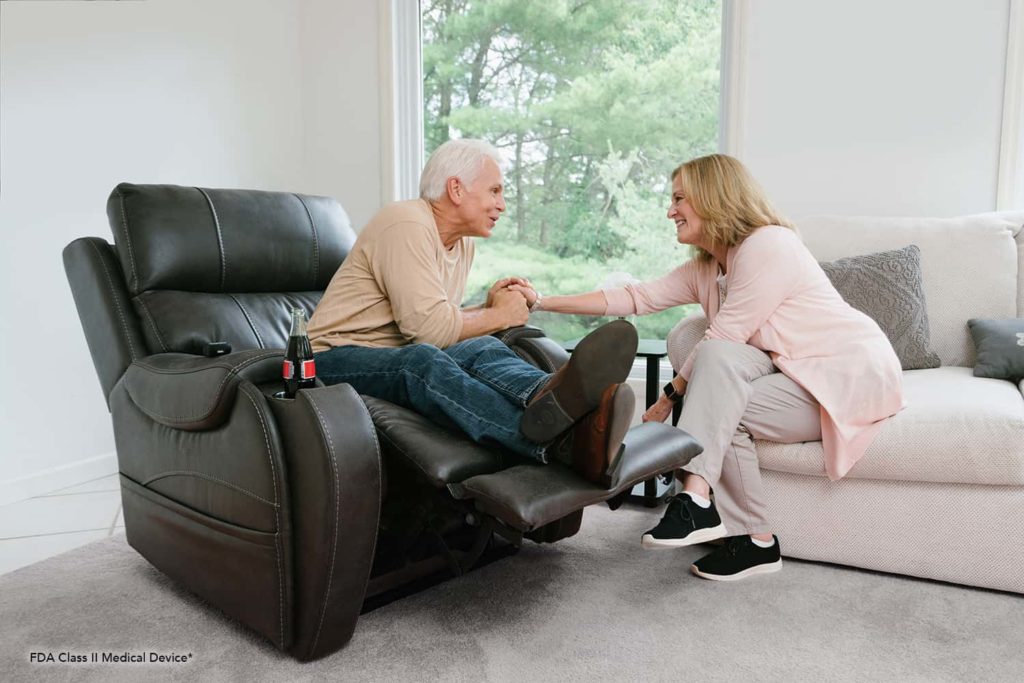
This is an FDA Class II medical device with a lifetime warranty on the steel lift mechanism and the feature owners on mobility forums say they wish they’d known about: an integrated emergency battery backup that raises the chair during a power outage, so you’re never stuck reclined. The full chaise pad supports the calves with no gap behind the knees, important for circulation.
Pros: battery backup included, lifetime lift-mechanism warranty, seamless chaise padding.
Cons: no heat or massage, fewer upholstery options.
Type: lay-flat lift chair | Motors: dual | Capacity: 400 lbs. | Upholstery: breathable faux leather
Heavier users get hit twice: more lower-leg swelling, and fewer chairs rated to hold them flat. This one’s frame passes 20,000-cycle durability testing at 400 lbs, reclines to lay-flat with independent leg control, and adds lumbar heat and massage. The faux leather wipes clean, a practical detail if swelling comes with skin sensitivity.
Pros: 400-lb tested frame, lays flat, easy-clean upholstery.
Cons: faux leather runs warm for hot sleepers, bulky footprint.
Type: zero-gravity power recliner (no lift) | Motors: dual | Capacity: 400 lbs. | Extras: heat, massage, extended footrest
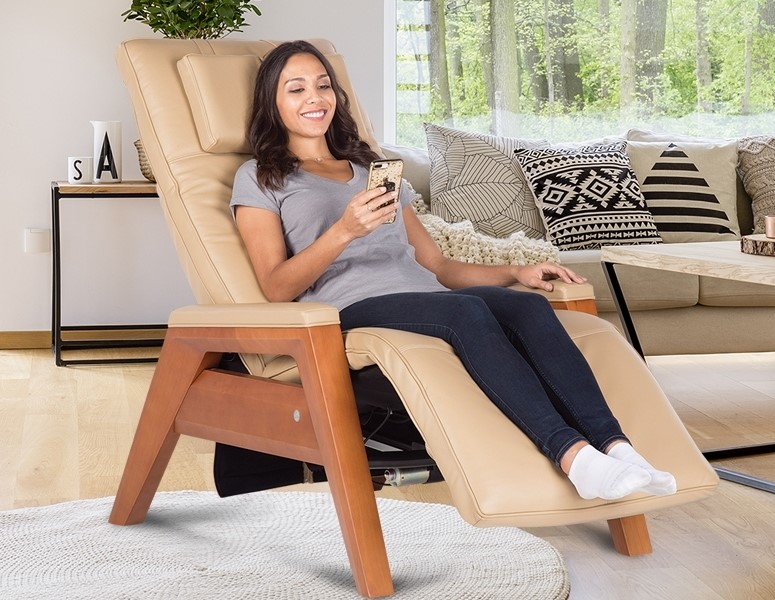
If you can stand up on your own, don’t pay for a lift mechanism. This chair keeps what matters for edema, dual motors, lay-flat recline, and a zero-gravity position that raises the knees above the chest, with heat, massage, and an extended footrest. Zero-gravity positioning distributes weight evenly, which owners with back pain report helps them stay reclined longer.
Pros: cheaper than lift chairs, true zero-gravity angle, extended footrest.
Cons: no standing assist, assembly takes two people.
Type: zero-gravity power recliner | Motors: triple | Capacity: 400 lbs. | Fits: 5’5″–6’3″
Tall users often find their head unsupported the moment a chair approaches flat. The third motor here adjusts the headrest independently, so someone 6’2″ can lie fully elevated without craning their neck, while the footrest and backrest still move separately for proper leg-above-heart positioning.
Pros: fits up to 6’3″, independent headrest, lays flat.
Cons: more motors means more remote buttons to learn, premium price.
Type: lay-flat lift chair | Motors: dual (TUV-certified) | Capacity: 400 lbs. | Fits: 5’5″-6’3″
Heels hanging off a short footrest create pressure points and undo the circulation benefit you bought the chair for. The 3.5-inch extended footrest here supports the full leg from knee to heel, and the counter-balanced lift raises you to standing without knee strain.
Pros: full heel support, TUV-certified motors, near-180° recline.
Cons: oversized, measure your space first, two-box delivery.
Yes, if they recline far enough. Elevating your legs above heart level lets gravity pull pooled fluid back toward your core, which reduces swelling in the feet and ankles. A recliner that only tips back partway keeps your feet in a lowered position and won’t help.
Roughly 150-180°. At that range, a properly designed footrest holds your feet above the level of your heart. Zero-gravity positions, which raise the knees above the chest, achieve the same effect.
Many people with swelling do, and lay-flat dual-motor chairs are built for it, see our guide to the best recliners for sleeping. If you also have reflux, a slight incline may actually help; we cover that in sleeping in a recliner for acid reflux.
The Irene House 9188 is the best recliner for swollen legs for most people, true lay-flat, independent leg control, and thousands of satisfied owners. Heavier users should go straight to the EONIX 400-lb lift chair, and if you don’t need standing assistance, the EONIX Zero Gravity delivers the same leg elevation for less.
This article is for general information only and isn’t medical advice. Persistent or sudden swelling can signal a heart, kidney, or circulatory condition, talk to your doctor before relying on leg elevation alone.